Welcome back to Hoosier on the Hill!
In this post, I highlight my recent trip to Washington, D.C., which took place earlier this week. While it is difficult to pinpoint a typical day as a lobbyist, this trip provides a pretty good flavor for some typical activities on the job.
Day 1
Tuesday was primarily focused on issue education, research and relationship building. After landing at the airport and taking the metro directly to the hotel, I checked in, dropped off my bag and headed off to my first meeting at the U.S. Grains Council (USGC).
A little bit of history for you, the USGC was founded in 1960 as a private, non-profit corporation with 10 international offices and programs in more than 50 countries. Its membership includes producer organizations and agribusinesses with a common interest in developing export markets primarily for U.S. barley, corn, grain sorghum and related products, including ethanol and distiller’s dried grains with solubles (DDGS). The mission of the USGC is to develop markets, enable trade and improve lives.
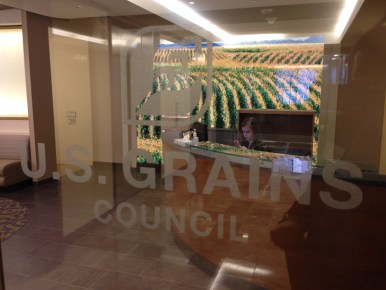
The focus of my meeting at the USGC was on international trade, a high priority issue for Indiana Farm Bureau and our 72,000 farmer members. The USGC is a partner with Farm Bureau in the Trade Benefits America and U.S. Coalition for Trans-Pacific Partnership (TPP), a broad-based and cross-sectoral coalition of U.S. companies and organizations urging Congress to pass TPP. I had the opportunity to meet with USGC’s Director of Trade Policy to discuss the latest trade-related updates and other upcoming activities of mutual interest. Trade will continue to be a priority issue over the course of the year for Farm Bureau. In fact, May is World Trade Month, and my next blog post will cover some of the activities and resources available to INFB members to promote this important issue.
After the meeting at USGC, I headed outside to order an Uber and fought D.C. traffic to get to my next meeting in the Georgetown area. I quickly shifted my attention from trade and TPP to livestock issues. This meeting consisted of a discussion related to the latest major announcements by large food manufacturers and retail companies regarding animal welfare requirements, namely cage-free eggs. We also touched on the proposed rule from the USDA related to animal welfare requirements for organic livestock producers. Farm Bureau continues to evaluate the proposed rule for impacts, but has already requested an extension to the comment period to ensure the USDA receives adequate feedback from the producers as well as the general public.
Day 2
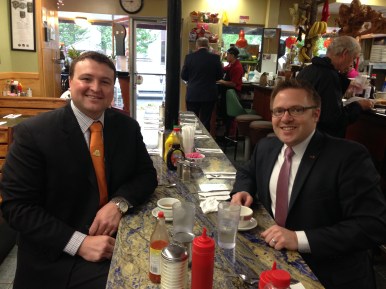
Before my busy day of meetings on Capitol Hill, I had a chance to meet up with a friend and colleague from the Michigan Farm Bureau, John Kran, for breakfast at Pete’s Diner. Pete’s is one of John Boehner’s favorite breakfast spots and word has it, a favorite of other members of congress. So we thought we’d give it a try. While very small and unassuming, Pete’s provides basic but tasty comfort food for a good price. I recommend the omelets which come standard with a side of French fries. It’s always great to get together with our friends from other state Farm Bureaus and hear the latest issues impacting their members.
A day on Capitol Hill is always very fast-paced and requires close attention to the schedule, time and the issues that we want our members of congress to hear about. I visited with each office in the Indiana congressional delegation on several issues including biotechnology labeling, trade, rail infrastructure and the Affordable Care Act.
After being on the job for nearly three years (boy does time fly!), I listened to my wife and slowed down between meetings to snap a few pictures of my surroundings, which I know I’m guilty of taking for granted from time to time.
Day 3
On Thursday, I attended a training session at AFBF on the topic of grassroots engagement. The AFBF public policy staff probably described the primary job functions of a lobbyist best:
- Education (of others as well as yourself)
- Sales
- Research
- Public relations and communications
- Networking and relationship building and management
As I reviewed the list, I realized that I touched on all five functions during the course of my trip. The training also included best practices for member advocacy and engagement, the do’s and don’ts from the congressional staff perspective, Capitol Hill visits, a simulation of what it is like to be a member of Congress and how to tell effective stories (guidelines taken directly from the Disney model).
After a full day of training, I grabbed my suitcase and descended down the long escalator to the metro to go back to the airport. Upon reaching my departure gate, I met up with Senator Joe Donnelly and had a chance to briefly catch up before boarding the plane. After a smooth flight to Indy and another hour and 15 minute drive, I finally arrived home around 10:00 p.m. where I was met at the doorstep by my three favorite people, anxiously waiting to hear all about my trip and discover what goodies I brought home in my suitcase. Just another day in my life as a lobbyist.

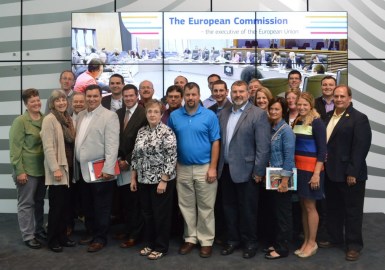 (Indiana and Michigan Farm Bureau leaders visiting the European Commission in September 2015 as part of the Agricultural Leadership Exchange)
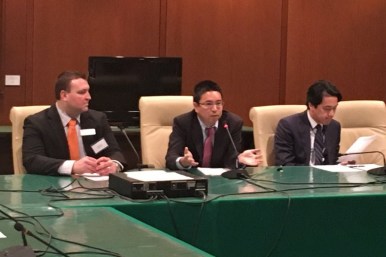 (Over 50 Indiana Farm Bureau members met with officials from the Embassy of Japan during the 2016 INFB Leader Trip to Washington, D.C. in March to discuss trade and TPP)

 Hoosier on the Hill