USDA Lockup: A Farmer’s Viewpoint

img_2269

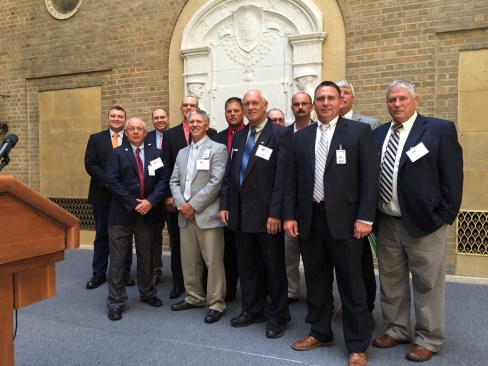
I had the opportunity to once again lead 12 farmers on a trip to Washington, D.C. to attend the USDA Lockup and Crop Report. I’m changing things up a little this week by showcasing one of the farmers who participated in the trip. Below is C.J. Fleenor’s guest blog post:

Recently, I was given the opportunity to cross an event off my “Bucket List.” We all have one: that list of random things we would like to accomplish, achieve or experience at some point. Washington, D.C., is truly an amazing city. I have been fortunate to travel there several times over the last few years, but there was still one thing I had not experienced…

The “D.C. Lockup.”

As farmers and people in agriculture, we know of the crop reports released by WASDE and NASS. It has always fascinated me how those reports can make billion-dollar changes in our pocketbooks and the general global economy.

When my regional manager approached me about Farm Bureau sponsoring an annual trip for the lockup, I didn’t think twice when I said “YES!” This was an opportunity to cross a bucket list item off for sure. However, I didn’t realize just how much went into that report. Nor did I realize how little was analyzed for such a monumental monthly document.

The Indiana Farm Bureau delegation, led by Kyle Cline, left on Thursday. Our day started with AFBF and a brief discussion on upcoming hot topics. From there, we travelled to the office of Chuck Conner and the National Council of Farmer Cooperatives, and visited the Canadian Embassy. We discussed U.S. agricultural issues, presidential politics and the importance of the TPP and trade. Our day was capped off with dinner and sightseeing of the beautiful city at night.

Friday, we headed to the USDA. After going through extensive security, we entered the pre-lockup room. There, we deposited any electronics, phones, watches, key fobs, etc., into lockers. Then we heard from NASS employees on how the report is generated. This is where I realized that more than 20,000 points of corn are gathered…equaling up to five acres total of corn. (It’s only one acre of soybeans!) From these sample sites, test weights, kernel quality, yield, etc., are gathered each month.

Then we experience the lock-up.

11 a.m. After passing through an electromagnetic scanner and two sets of locked doors, we hear from statisticians and get a tour. They come in to analyze the data and compile the report just before midnight and can’t leave until the report is released.

11:30 a.m.: We enter the briefing room, where we read the report and speculate on its impact on the markets.

11:45 a.m.: The secretary of agriculture or his designee – in our case, the chief economist – enters the room and the official briefing begins.

Noon: The report is released and the statisticians may leave.

Everything concludes by 12:30 p.m. There were no windows, no doors outside and no communication with the outside world.

I always envisioned this as a general media report; the briefing aspect was interesting. It was a true government briefing, and we were there to witness as the chief economist realized the impact that the decreased expected fall price would have upon ARC and PLC payments, among other supply/demand concerns.

Ultimately, this was a once in a lifetime opportunity, and I would strongly encourage any member to consider attending. The security, the process, the methodology and the presentation were amazing. Not to mention getting to read a copy of the August crop report before anybody else had! I greatly appreciate Kyle and the Indiana Farm Bureau allowing me this opportunity!
C.J. Fleenor, Orange County Farm Bureau President
img_2272

Election Year Activities Heat Up in the Hoosier State

Following a successful 306-117 vote last week in the U.S. House on the Farm Bureau-supported GMO labeling bill, Congress adjourned for its annual August Recess.  Given this is an election year, lawmakers will have more time at home than normal to allow for their attendance at the national party conventions.

Last week was a big week in politics for Indiana, as Governor Mike Pence was selected as Donald Trump’s vice presidential running mate, which was formally confirmed this week at the Republican National Convention in Cleveland.  Another big announcement was that former U.S. Senator Evan Bayh was returning to politics to seek the open Senate seat being vacated by Senator Dan Coats, which resulted in Baron Hill’s exit as the Democratic Party candidate. These developments also triggered a series of announcements by others, such as Congressman Todd Rokita and Congresswoman Susan Brooks each declaring their intent to run for the vacated governor’s seat.  Their fate will be determined by a 22 person state committee of Republican leaders who will meet next week to decide who the gubernatorial candidate will be.

With the eyes of the nation squarely on election year activities and developments, the American Farm Bureau Federation has developed an Election ‘16 website with resources and information on the upcoming November elections.  The website “gives rural voters an informative look at everything from the campaign for president to local issues.”  Visitors to the website are able to select their state and receive relevant information.  While Indiana Farm Bureau does not make endorsements for president, we encourage members and rural residents to familiarize themselves with each candidate and their respective positions on the issues that impact rural Hoosiers the most.  The AFBF website is one resource that can be used in making an informed vote.

Southern Hospitality

Last week I had the opportunity to travel to Memphis, Tennessee to participate in the annual American Farm Bureau Federation (AFBF) Environmental Issues Conference. I joined fellow AFBF and state Farm Bureau staff from all over the country for a few days focused on all things environmental policy and regulation, which has increasingly become the hot topic the agriculture community

On day 1, we discussed various topics including the challenges and opportunities facing the agriculture community in regards to nutrient management strategies, loss reduction and conservation.  One of the most beneficial and interesting portions of the meeting for me was when each state provided a brief update on conservation projects and activities occurring back at home.  It was encouraging to hear all of the voluntary initiatives that state Farm Bureaus and other leaders are spearheading to help farmersimprove watershed and wildlife habitat health while improving yields and production and enhancing the economics of farming.  For more information or examples of voluntary state programs where farmers are taking responsibility for improving water quality, I’d encourage you to check out some information related to Indiana including Impact Indiana, ISDA, and Purdue University.  Other good examples outside of the Hoosier state are Ohio, Michigan, Illinois and Florida.

The following day of the conference, our group set out on a tour bus to observe many of the issues and topics we had discussed the day before.  The Mississippi Farm Bureau pulled out all the stops for us, including some great farm visits, delicious southern food and some history and culture along the way.  They even special ordered the bus just for me!
ClinebusWe spent the day along the Mississippi Delta visiting with farmers and extension researchers who are passionate about nutrient loss reduction and conservation, including Buddy Allen of M&B Farms.  Buddy gave our group a presentation on his innovative closed system tail water recovery system where he is collecting water runoff into a pond, capturing the nutrients and reapplying them to his rice fields, improving water quality downstream while reducing his input costs on the farm.

farm2

Buddy also gave us a briefing on the various soil types found in the Mississippi Delta region, which can vary significantly depending on location and proximity to the river.  (On a side note, it was really cool for this Hoosier farm boy to see rice and cotton growing in the field, a first for me.)

The next stop was Dundee, MS, where our group visited with Darrin Dodds and Trent Irby of MSU Extension.  The purpose of this research plot is to investigate Palmer Amaranth (aka pigweed) and Duo/Enlist management as well as drift control techniques for dealing with this nasty weed on the farm.  Even though pigweed got its start in the south, it has emerged in the last few years in the Hoosier state and is an issue that some of our farmers are forced to manage now.

farm3

After our visit to the MSU Extension research plot, the Mississippi Farm Bureau treated us to some outstanding southern barbecue courtesy of the Hopson Commissary, a restaurant now housed at a former cotton plantation.  Hopson Commissary is located in Clarksdale, MS, home of Muddy Waters, iconic blues musician and father of the Chicago blues.  Clarksdale is a key stop along the “Blues Highway” and has been showcased by National Geographic and many other travel magazines.

hopson

The owner of Hopson provided a briefing to our group about the history of the plantation and its impressive place in agricultural history.  According to the website, “In 1935 the Hopson Plantation began a monumental changeover to become one of the first completely mechanized cotton operations in the world.  In the fall of 1944, International Harvester introduced the first cotton picker on the Hopson farm making it the first in the world to grow and harvest a commercial acreage of cotton produced completely by mechanical methods.”

In addition to outstanding food and live music, Hopson also offers overnight accommodations which National Geographic has also recommended to tourists.  The Shack Up Inn “is a collection of restored sharecropper shacks and boutique hotel rooms built inside renovated cotton bins”.

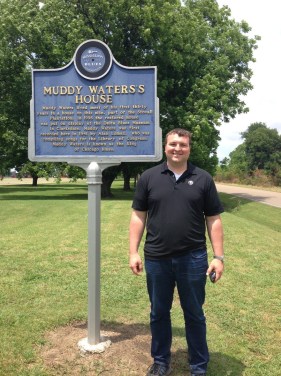
After lunch, we visited the Stovall Plantation, birthplace of Muddy Waters. While the cabin in which Muddy Waters lived is not there, visitors can see the beautifully restored structure in the Delta Blues Museum in nearby Clarksdale.   In addition to learning more about blues history, the stop also included a farm tour by Pete Hunter, who farms the land today.  Pete told us about his conservation practices including two-stage ditches and water recovery systems.

muddywatters

Our final stop before dinner included a visit to Mid-South Ag Case IH where we learned about the latest and greatest technology from Case IH.  Of particular interest to me was the new lineup of Patriot Sprayers that Case IH offers which tied into themes covered earlier in the day at the MSU research plot about drift control and precision spray applications.

After a long day of touring the Mississippi Delta, our group finished with a traditional southern dinner of fried catfish, okra, cole slaw and the kind of sweet ice tea that would make your dentist cringe.  It was nice eating dinner on the banks of the Mississippi River at the Tunica Riverpark Museum.

Before I left Memphis to come back to Indiana, I wanted to make time to eat some barbecue at the iconic Rendezvous.  I also had a chance to meet up with my friends Nick and Maria for dinner one evening at Gus’s for some out-of-this world fried chicken.

bosch

Nick participated in the Robert Bosch Fellowship the same year that I did (2012-2013), which sent both of us to Germany for a year of work, professional development, travel and seminars; an experience my family will never forget.

After a productive week, I headed to the airport to fly back to the Hoosier state to enjoy a nice, long Memorial Day weekend full of great weather and ironically enough…barbecue!

A Day (or Three) in the Life of a Lobbyist

Welcome back to Hoosier on the Hill!

In this post, I highlight my recent trip to Washington, D.C., which took place earlier this week.  While it is difficult to pinpoint a typical day as a lobbyist, this trip provides a pretty good flavor for some typical activities on the job.

Day 1
Tuesday was primarily focused on issue education, research and relationship building. After landing at the airport and taking the metro directly to the hotel, I checked in, dropped off my bag and headed off to my first meeting at the U.S. Grains Council (USGC).
A little bit of history for you, the USGC was founded in 1960 as a private, non-profit corporation with 10 international offices and programs in more than 50 countries. Its membership includes producer organizations and agribusinesses with a common interest in developing export markets primarily for U.S. barley, corn, grain sorghum and related products, including ethanol and distiller’s dried grains with solubles (DDGS).  The mission of the USGC is to develop markets, enable trade and improve lives.
IMG_3986
The focus of my meeting at the USGC was on international trade, a high priority issue for Indiana Farm Bureau and our 72,000 farmer members. The USGC is a partner with Farm Bureau in the Trade Benefits America and U.S. Coalition for Trans-Pacific Partnership (TPP), a broad-based and cross-sectoral coalition of U.S. companies and organizations urging Congress to pass TPP.  I had the opportunity to meet with USGC’s Director of Trade Policy to discuss the latest trade-related updates and other upcoming activities of mutual interest. Trade will continue to be a priority issue over the course of the year for Farm Bureau.  In fact, May is World Trade Month, and my next blog post will cover some of the activities and resources available to INFB members to promote this important issue.

After the meeting at USGC, I headed outside to order an Uber and fought D.C. traffic to get to my next meeting in the Georgetown area.  I quickly shifted my attention from trade and TPP to livestock issues.  This meeting consisted of a discussion related to the latest major announcements by large food manufacturers and retail companies regarding animal welfare requirements, namely cage-free eggs. We also touched on the proposed rule from the USDA related to animal welfare requirements for organic livestock producers.  Farm Bureau continues to evaluate the proposed rule for impacts, but has already requested an extension to the comment period to ensure the USDA receives adequate feedback from the producers as well as the general public.

Day 2
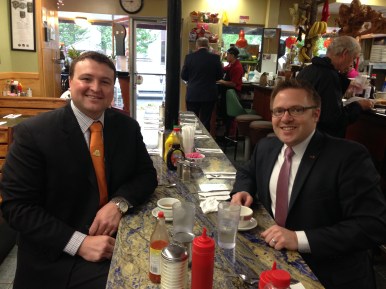
Before my busy day of meetings on Capitol Hill, I had a chance to meet up with a friend and colleague from the Michigan Farm Bureau, John Kran, for breakfast at Pete’s Diner.  Pete’s is one of John Boehner’s favorite breakfast spots and word has it, a favorite of other members of congress.  So we thought we’d give it a try.  While very small and unassuming, Pete’s provides basic but tasty comfort food for a good price.  I recommend the omelets which come standard with a side of French fries.  It’s always great to get together with our friends from other state Farm Bureaus and hear the latest issues impacting their members.
IMG_4004
A day on Capitol Hill is always very fast-paced and requires close attention to the schedule, time and the issues that we want our members of congress to hear about.  I visited with each office in the Indiana congressional delegation on several issues including biotechnology labeling, trade, rail infrastructure and the Affordable Care Act.

After being on the job for nearly three years (boy does time fly!), I listened to my wife and slowed down between meetings to snap a few pictures of my surroundings, which I know I’m guilty of taking for granted from time to time.

Day 3
On Thursday, I attended a training session at AFBF on the topic of grassroots engagement.  The AFBF public policy staff probably described the primary job functions of a lobbyist best:

  • Education (of others as well as yourself)
  • Sales
  • Research
  • Public relations and communications
  • Networking and relationship building and management

As I reviewed the list, I realized that I touched on all five functions during the course of my trip.  The training also included best practices for member advocacy and engagement, the do’s and don’ts from the congressional staff perspective, Capitol Hill visits, a simulation of what it is like to be a member of Congress and how to tell effective stories (guidelines taken directly from the Disney model).

After a full day of training, I grabbed my suitcase and descended down the long escalator to the metro to go back to the airport.  Upon reaching my departure gate, I met up with Senator Joe Donnelly and had a chance to briefly catch up before boarding the plane.  After a smooth flight to Indy and another hour and 15 minute drive, I finally arrived home around 10:00 p.m. where I was met at the doorstep by my three favorite people, anxiously waiting to hear all about my trip and discover what goodies I brought home in my suitcase.  Just another day in my life as a lobbyist.

Grassroots Advocacy in Action

Welcome!

I am Kyle Cline, your Hoosier on the Hill.  I’m excited to get this blog going and share my passion for public policy, government and all things agriculture.  I will be your host as we examine the issues and stories coming out of Washington, D.C. that impact American farmers and their rural communities.  In this first post, I highlight the annual Indiana Farm Bureau Leader Trip to Washington, D.C.

2-DC trip-DSC_7087-JAW

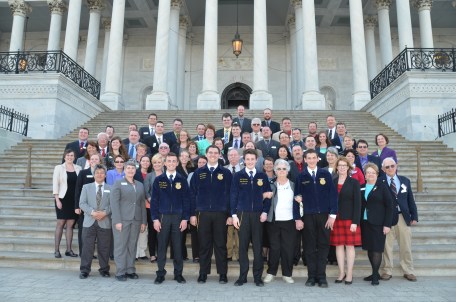
Each year, Indiana Farm Bureau members descend on Capitol Hill for the annual Leader Trip to Washington, D.C.  This trip is a prime opportunity for INFB members to participate in leadership development, issue education and to engage in some good old fashioned grassroots advocacy, including visits with their federal elected officials.  This year, the Leader Trip took place March 22-24 and included participation from 56 members.

The agenda may change from year to year, but the Leader Trip always includes plenty of opportunities for education on Farm Bureau’s national priority issues.  On day 1, our members arrived bright and early in Washington, D.C. and were greeted by the colorful cherry blossoms which were on full display the entire week.  Our first stop was a visit to the American Farm Bureau Federation. Members learned about the latest legislative and regulatory updates on some of the most pressing agricultural issues including biotechnology and GMO labeling, regulatory reform, trade and Trans-Pacific Partnership (TPP), farm policy and tax reform.  After hearing from INFB staff on advocacy “best practices” and planning their congressional visits for the next day, the Leader Trip participants set off on foot for the USDA, where the group heard from Acting Deputy Secretary Michael Scuse, Assistant Secretary for Congressional Relations Todd Batta, and Farm Service Agency Administrator Val Dolcini.  The discussions during this segment included international trade and TPP, farm policy, conservation and many other current issues.  Following the briefings, Leader Trip participants had an unexpected opportunity to tour USDA Secretary Vilsack’s office, which was possible because the secretary happened to be visiting Cuba with the president and other leaders.

haugheecapture nagaicapture

Day 2 of the Leader Trip was the official Capitol Hill Day.  Farm Bureau members took their new knowledge as well as their own unique perspectives and stories from their farms and communities and delivered a grassroots message to Congress about the importance of agriculture.  Members were organized in groups by congressional districts and had the opportunity to meet with their congressman/congresswoman to ask them for their support on Farm Bureau’s priority issues and legislation.

brookscapture

Representatives Luke Messer and Susan Brooks even took a few minutes away from their busy schedules to talk to us about the importance of constituent involvement in the legislative process and how office visits in D.C. are helpful to their work.  Their message re-confirms the positive difference that Farm Bureau and its members are making everyday.

messercapture

In the afternoon, our group visited the Senate Agriculture Committee and heard from Chief Economist Matt Erickson and Chief Counsel Anne Hazlett, both Hoosiers making a big difference on Capitol Hill for agriculture.  Last but not least, the group met up with the Iowa Farm Bureau in the afternoon for a session on renewable fuels and the future of farm policy.  Iowa Farm Bureau members were in town for their own version of the Leader Trip.

On Day 3, our members grabbed their passports and went global by paying a visit to the Embassy of Japan.  As an important trading partner and key nation in the proposed TPP, a visit with Japan made perfect sense.  Much of the discussion with Japanese officials focused on TPP and the importance of ensuring passage by Congress before the end of the year.  Japan plans to consider TPP for a vote in their parliament likely sometime in early summer.  The discussion was a good reminder to our members about how important international trade is to their bottom lines and profitability on the farm.  In a time when farm incomes have dropped 56% since 2013, more trade and market access for our products will be needed to get out of the hard times.  In Indiana alone, AFBF estimates an increase in cash receipts by $196 million and net exports by $98.3 million annually.  The largest gains will be in the soybean, corn, pork and beef sectors.

Overall, the 2016 Leader Trip was a success.  It is inspiring to me and the rest of the INFB staff to see current and future Farm Bureau leaders taking ownership of their destiny as they become effective advocates for agriculture.  It is empowering to see the effects of grassroots advocacy in action and the difference Farm Bureau makes when a few of us come together around a common cause.